The Landlord’s Guide to Expert Property Management in 2026

Updated: Jul 23
On 1 May 2026, the rulebook for UK landlords didn't just change; it was entirely rewritten. With Section 21 abolished and the transition to Assured Periodic Tenancies now mandatory, the traditional "hands-off" approach to property management is no longer a viable strategy for protecting your equity. You likely feel the mounting pressure of these legislative shifts, especially if you're already balancing middle-of-the-night maintenance emergencies with the new Making Tax Digital requirements. To manage these reporting obligations effectively, you can discover Stewart Accounting Services for expert financial guidance. It's frustrating when your investment feels more like a demanding full-time job than a source of passive income.
We're here to ensure you stay ahead of the curve. This guide will help you master the essentials of modern property management to protect your investment, ensure full legal compliance, and maximise your rental yields in a competitive market. We'll explore how to navigate the Renters' Rights Act, attract high-quality professional tenants, and maintain your assets without the typical stress. By the end of this article, you'll have a clear roadmap for achieving a high-performing portfolio that runs with clinical efficiency and total reliability.
Table of Contents
What is Property Management and Why is it Vital in 2026?
Effective property management isn't just a service; it's a shield. While some view it as a series of reactive tasks like fixing a boiler or chasing a late payment, it is actually a sophisticated asset protection strategy. In 2026, the role has evolved from simple oversight to proactive "lifestyle management." High-end tenants in the Liverpool City Region now expect a seamless, premium experience that matches the quality of their luxury surroundings. To truly understand What is Property Management in a modern context, you must view it as the professional bridge between your capital and the increasingly complex needs of the rental market.
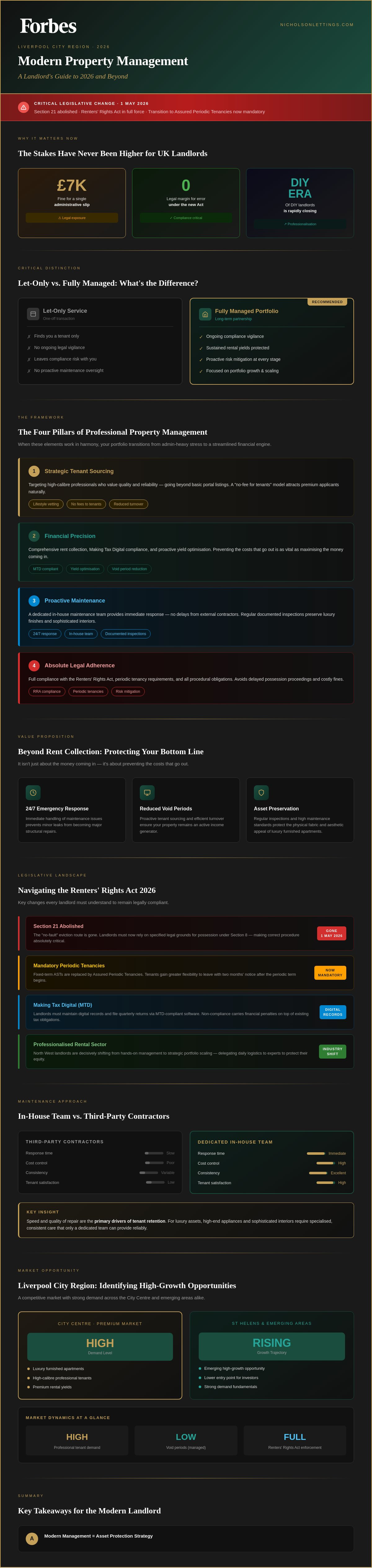
The 2026 market demands higher standards than ever before. With the Renters’ Rights Act now in full force, the legal margin for error has vanished. This is where the distinction between "let-only" and "fully managed" becomes critical. A let-only service might find you a tenant, but a fully managed portfolio provides the ongoing vigilance required to ensure legal compliance and sustained rental yields. It's the difference between a one-off transaction and a long-term partnership focused on growth and risk mitigation.
The Evolution of the Modern Landlord
The era of the "DIY" landlord is rapidly closing. Managing a property independently has become a high-risk venture due to the sheer volume of procedural requirements and the threat of £7,000 fines for administrative slips. In the North West, we've seen a decisive shift towards a professionalised rental sector. Landlords are moving away from hands-on management to focus on strategic portfolio scaling. By delegating the daily logistics to experts, you protect yourself from the errors that can lead to delayed possession proceedings. Professional management isn't just a convenience; it's a prerequisite for serious investment.
Beyond Rent Collection: The Value Proposition
The true value of expert management lies in the details that protect your bottom line. It isn't just about the money coming in; it's about preventing the costs that go out. A dedicated approach provides several key benefits:
24/7 Emergency Response: Immediate handling of maintenance issues prevents minor leaks from becoming major structural repairs.
Reduced Void Periods: Proactive tenant sourcing and efficient turnover ensure your property remains an active income generator.
Asset Preservation: For luxury furnished apartments, regular inspections and high maintenance standards are vital to protect the physical fabric and aesthetic appeal of your investment.
By treating your property as a premium asset rather than just a building, you secure higher-quality tenants and ensure your investment thrives throughout 2026 and beyond. This proactive stance is what separates successful investors from those struggling to keep up with the industry's rapid pace.
The Four Pillars of Professional Property Management
Professional property management is built on a foundation of four critical pillars: strategic sourcing, financial precision, proactive maintenance, and absolute legal adherence. When these elements work in harmony, your portfolio transitions from a source of admin-heavy stress to a streamlined financial engine. This structured approach is essential for protecting the high-value assets found in the Liverpool City Region today. It's about creating a system where every variable is controlled and every risk is mitigated before it impacts your yield.
Sourcing the "Professional Tenant"
Finding the right occupant for a luxury apartment requires more than just listing on a portal. It's about targeting high-calibre professionals who value quality and reliability. By utilising a "no-fee for tenants" model, you naturally attract a wider pool of premium applicants who are often deterred by traditional agency charges. Our vetting process moves beyond basic credit scores. We assess lifestyle fit to ensure that tenants will respect the high-end finishes and bespoke interiors of your fully furnished investment. This careful selection process is the first line of defence against high turnover and property wear.
Maintenance: The Dedicated Team Advantage
Speed and quality of repair are the primary drivers of tenant retention. Relying on external third-party contractors often leads to delays, inflated costs, and inconsistent standards. A dedicated, in-house maintenance team provides an immediate response that protects the physical fabric of your property. This is particularly vital for luxury assets where high-end appliances and sophisticated interiors require specialised care. Regular, documented inspections are not just a formality; they are a vital tool for asset preservation. If you want to see how these standards are maintained in practice, you can explore our dedicated maintenance services to understand the professional difference.
Financial Innovation: Deposit Alternatives
Modern property management must embrace financial flexibility to stay competitive. Traditional five-week deposits can be a significant barrier for even the most qualified professionals. Deposit alternative schemes, such as Reposit, solve this by reducing upfront costs for tenants whilst actually increasing the level of cover for the landlord. These schemes often provide up to eight weeks of protection, offering a more robust safety net than traditional cash deposits. This innovation streamlines the end-of-tenancy process and ensures your cash flow remains protected from the outset.
Legal Compliance and Document Management
The final pillar is the most rigid. Staying abreast of Legal Compliance for Landlords is a full-time commitment. From ensuring Gas Safety Records and EPCs are up to date to managing the mandatory Government Information Sheets required by the Renters' Rights Act, the paperwork is extensive. Professional management ensures that every certificate is logged, every notice is served correctly, and every safety standard is met without you ever having to check a calendar. This level of precision provides the "premium care" environment that modern landlords require to scale their portfolios safely.
Navigating Legal Compliance and the Renters’ Rights Act
On 1 May 2026, the legislative landscape for UK landlords underwent its most significant transformation in decades. The Renters’ Rights Act is no longer a future prospect; it is the current reality. For anyone involved in property management, this shift requires a total recalibration of how tenancies are structured and maintained. The margin for administrative error has narrowed to zero. Failing to provide a tenant with the mandatory Government Information Sheet by 31 May 2026, for example, now carries a potential fine of £7,000. This environment demands a level of precision that goes far beyond basic landlord duties.
Beyond the headline acts, daily compliance involves a rigorous schedule of safety certifications and data handling. You must ensure that Gas Safety Records, Electrical Installation Condition Reports (EICR), and Energy Performance Certificates (EPC) are not only valid but served correctly to the tenant. Add to this the complexities of Right to Rent checks and the strict requirements of GDPR for handling tenant data, and the administrative burden becomes clear. Non-compliance doesn't just result in financial penalties; it can lead to bans from the industry and the inability to regain possession of your property when needed.
The End of Section 21 and What it Means
The abolition of Section 21 "no-fault" evictions is the cornerstone of the 2026 reforms. All existing Assured Shorthold Tenancies have automatically converted to Assured Periodic Tenancies. This means you can only regain possession through reformed Section 8 grounds, which requires a robust, evidence-based approach. Professional property management is now essential for documenting every aspect of the tenancy. If a tenant falls into significant arrears or exhibits anti-social behaviour, having a meticulous paper trail is the only way to navigate the court system successfully. We've updated all our tenancy agreements to be fully 2026-compliant, ensuring your rights as a landlord are protected within this new framework.
Health and Safety Standards for Luxury Lettings
Luxury furnished apartments come with specific safety obligations that unfurnished properties do not. All furniture and furnishings must meet strict fire safety regulations. Furthermore, managing the risks of Legionella through regular assessments and ensuring carbon monoxide alarms are installed and tested are non-negotiable requirements. This is where our unique Tenant Liaison Officer role becomes invaluable. They act as a direct line of communication, ensuring safety information is not just sent, but understood by the tenant. This proactive engagement reduces risk and ensures that your high-end assets remain both safe and legally compliant at all times.
Maximising ROI in the Liverpool City Region Market
General market data often fails to capture the nuance of the North West. While national reports might suggest a cooling trend, the Liverpool City Region tells a different story. In May 2026, the average monthly private rent in Liverpool reached £901, representing a 6.2% annual increase. This growth isn't uniform across the region. Achieving the best return on your investment requires a deep understanding of local micro-climates, from the high-density luxury developments in Liverpool City Centre to the emerging professional hubs in St Helens and Wigan. Expert property management is the tool that turns these regional insights into actual profit.
Liverpool vs. St Helens: A Tale of Two Markets
The demand profile for an apartment in Liverpool L1 is fundamentally different from a professional let in St Helens. In the city centre, velocity is key. Tenants are looking for immediate access to business hubs and high-end amenities; they're willing to pay a premium for fully furnished, "move-in ready" spaces. Conversely, St Helens has evolved into a vital commuter market. Professionals here often seek the same luxury standards found in the city but with a focus on transport links to Manchester and Liverpool. We tailor our management style to these specific expectations, ensuring that your property appeals to the highest-calibre applicants in its specific postcode.
The Hidden Costs of Poor Management
Many landlords underestimate the financial impact of a poorly managed transition. If your property sits empty for just four weeks, you aren't just losing £901 in rent. You're also absorbing the costs of council tax, utilities, and the increased risk of a stagnant asset. Over time, poor maintenance devalues your long-term capital growth. High-end tenants expect high-end responses. If repairs are delayed, your tenant turnover will spike, leading to more frequent void periods and higher re-letting costs.
Hiring a specialist North West agency ensures that your asset is priced correctly from day one. We use real-time data to set valuations that balance maximum yield with minimum vacancy. To see how we can optimise your portfolio's performance, you can explore our property management services today. This proactive approach is what allows our clients to outperform generic market averages and secure their financial future.
The Nicholson Approach: Elevating Property Management
Managing a portfolio of over 250 luxury properties requires more than just an organised spreadsheet. It demands a dedicated infrastructure designed to handle the specific complexities of the high-end rental market. At Nicholson Lettings, we've moved away from the traditional agency model to create a system rooted in "premium care." Our approach is built on the belief that luxury assets, particularly fully furnished apartments, require a bespoke level of attention that standard property management services simply cannot provide. We don't just manage buildings; we curate a professional lifestyle for tenants whilst protecting the long-term interests of our landlords.
The transition to our service is designed to be seamless. Switching your portfolio to Nicholson is a straightforward procedural move where we handle the logistical heavy lifting. From auditing your current compliance documents to introducing ourselves to your existing tenants, we ensure there's no friction during the handover. This proactive transition sets the tone for a relationship based on transparency, reliability, and high standards of maintenance.
The Tenant Liaison Officer: Our Secret Weapon
Communication breakdown is often the primary reason landlords seek new property management. We've solved this by introducing the unique role of the Tenant Liaison Officer. This specialist acts as a dedicated bridge between your requirements and the tenant's needs. Instead of a tenant being passed between different departments, they have a single point of contact for every query. This reduces friction, accelerates issue resolution, and significantly increases tenant retention. By treating tenants with professional respect and providing clear lines of communication, we create a stable environment that protects your rental income.
Flexible Tenancies and Modern Financials
The 2026 professional tenant values flexibility and financial transparency. We meet this demand by offering flexible tenancy agreements that reflect the modern working world. Our expertise as a deposit-alternative scheme expert allows us to integrate Reposit into our onboarding process. This reduces the significant upfront cost for the tenant, allowing for a faster move-in, whilst providing you with up to eight weeks of cover. When combined with our "no-fee for tenants" model, your property becomes the most attractive option on the market. This strategy doesn't just fill voids; it attracts a higher calibre of applicant who values the ease and sophistication of the Nicholson House standard.
Our commitment to excellence is reflected in every property we manage. By maintaining a dedicated in-house maintenance team, we ensure that the "fully furnished" status of your luxury asset is never compromised. We set clear expectations, provide absolute legal protection, and deliver the passive income you expect from a high-performing investment. This is property management redefined for the modern era.
Securing Your Investment's Future in the 2026 Market
The rental landscape of 2026 demands a sophisticated approach that balances strict legal compliance with a premium tenant experience. We've explored how the abolition of Section 21 and the rise of periodic tenancies make meticulous documentation and proactive maintenance non-negotiable. Success in the Liverpool City Region now depends on your ability to adapt to these shifts whilst maintaining the high standards that professional tenants expect. Expert property management is the essential tool for navigating this complexity without the associated stress.
With over 250 luxury properties under our care, we provide the specific infrastructure needed to protect your assets. Our dedicated in-house maintenance and liaison teams ensure your fully furnished apartments remain in peak condition while your tenants receive the high-end service they deserve. It's about achieving reliable passive income with total peace of mind. Discover how Nicholson Lettings can transform your property portfolio. You've worked hard to build your investment; now it's time to let it work for you with the support of a proactive, authoritative partner.
Frequently Asked Questions
What is the standard fee for property management in the UK?
Full property management fees in the UK typically range from 8% to 20% of the monthly rent. In the North of England, the average annual fee was recorded at £1,237 in 2026. These costs vary based on the location and the specific level of service provided. You should always check if the quoted fee includes VAT and whether there are additional charges for bespoke services like deposit-alternative setup.
Does a property manager handle emergency repairs at night?
A professional manager coordinates the response to urgent maintenance issues to protect your asset. While specific availability varies by agency, high-end providers utilise dedicated maintenance teams to ensure repairs are handled swiftly. This prevents minor leaks from becoming major structural problems. Our approach involves a dedicated maintenance team that understands the specific requirements of luxury furnished apartments, ensuring that both the tenant and the property are protected.
How often should a property management company inspect my house?
Standard practice involves conducting thorough property inspections every three to six months. This frequency balances the need for diligent oversight with the tenant's legal right to quiet enjoyment. These visits are essential for identifying early signs of wear and tear, especially in fully furnished properties. Every inspection should be documented with a detailed report to ensure you have a clear paper trail for insurance and compliance purposes.
What happens if a tenant stops paying rent under a managed service?
Your manager will immediately initiate a formal arrears process, which includes sending late payment notices and attempting to resolve the issue through the Tenant Liaison Officer. Since the abolition of Section 21 in May 2026, regaining possession requires following reformed Section 8 grounds. A managed service ensures that all communication is legally compliant, providing the necessary evidence should you need to move toward a court-based possession claim.
Do I still need landlord insurance if I have a property manager?
Yes, specialist landlord insurance remains an absolute necessity regardless of your management structure. While a manager handles the daily logistics and maintenance coordination, they don't cover the financial risks associated with fire, flood, or property owner’s liability. You should inform your insurer that the property is professionally managed, as this proactive oversight can sometimes be viewed favourably during the premium calculation or claims process. For many landlords, partnering with a specialist commercial insurance broker staffordshire like Just Quote Me is a smart way to access bespoke policies that provide total peace of mind for their investments.
How does the Renters’ Rights Act affect property management in 2026?
The Renters’ Rights Act, effective from 1 May 2026, fundamentally changed property management by abolishing "no-fault" evictions and ending rent bidding. All tenancies are now Assured Periodic Tenancies, meaning landlords must use specific, evidence-based grounds to regain possession. Additionally, the mandatory requirement to provide a Government Information Sheet by 31 May 2026 has made professional administrative precision a vital requirement to avoid significant fines of up to £7,000.
Can I switch letting agents if I am unhappy with my current management?
You can switch agents at any time, though you must adhere to the notice period in your current contract, which is usually one to three months. A professional manager will handle the entire handover process for you. This includes collecting keys, securing the safety certificates, and notifying the tenants of the change. We specialise in seamless portfolio onboarding to ensure there's no interruption to your rental income during the transition.
What is the difference between a letting agent and a property manager?
A letting agent traditionally focuses on the "front-end" of the process, such as marketing the property and sourcing a tenant. A property manager handles the ongoing "back-end" relationship, including maintenance, rent collection, and legal compliance throughout the tenancy. Whilst some companies offer these as separate services, a comprehensive management service combines both roles to provide a single, continuous point of contact for the entire lifecycle of your investment.