Compare rents, bills and monthly costs in Liverpool

A rent figure is only part of your monthly outgoings. For anyone renting in Liverpool as a young professional, bills aren’t automatically included, so compare what each listing covers before weighing up the total. Council Tax can also vary by property: Liverpool Waterfront apartments are often in Bands D or E, compared with Band A for a terraced house in the suburbs.
It’s easy to focus on location and rent when planning a move, but household bills, travel and furnishing needs also shape your budget. The right home depends on how you want to live day to day, from a furnished apartment close to work to a larger place with room to share.
This guide compares the main outgoings to consider, explains how a furnished home can affect your move, and looks at Liverpool neighbourhoods and larger properties. Use it to compare options against your work, commute and comfort priorities.
Table of Contents
Council Tax bands and monthly outgoings
Rent is only one part of a Liverpool housing budget. Council Tax, household bills and travel all affect what you need to set aside each month. Start with the exact property address and check its Council Tax band. Then confirm which services are included in the rent rather than assuming energy, water or broadband are covered.
A Council Tax band helps you compare properties, but your total outgoings also depend on household arrangements and daily habits. Add energy, water and broadband where they’re charged separately. Travel and parking costs depend on where you work and how you commute. A home closer to work may mean less travel, while another location may better suit your lifestyle.
There is no single average rent for every one-bedroom flat in Liverpool in 2026. Location, size, condition and furnishings all affect rent, while bills and Council Tax shape the wider monthly budget. Compare current properties with similar features and check each listing’s inclusions before assessing the total.
Use this table to organise the comparison for each address:
Compare rent, Council Tax band, included bills and travel needs together. The right choice is the combination that fits your budget and the way you live.
In England, tenants should follow the tenancy agreement, pay rent as agreed and take reasonable care of the home. Landlords must meet their legal responsibilities, including required repairs and safety obligations.
Possible upfront costs include a holding deposit, tenancy deposit, rent in advance, moving expenses and household essentials. What applies depends on the tenancy and what the property already provides. Separate one-off payments from ongoing monthly outgoings when planning your budget.
Furnished and unfurnished accommodation
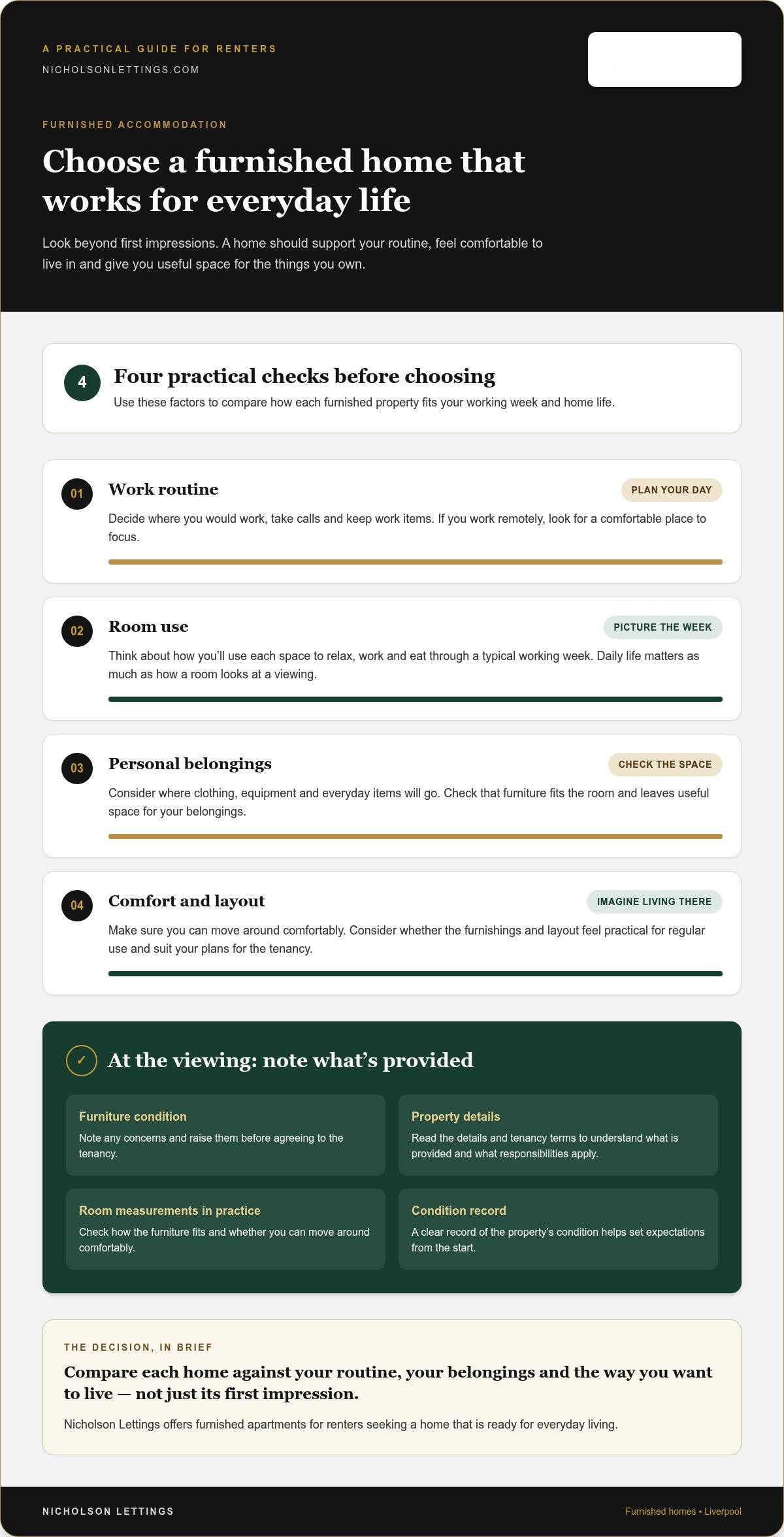
A furnished home can make settling into Liverpool simpler, but the label alone doesn’t show whether it suits your routine. Think about how you’ll use each room to relax, work, eat and store your belongings. A well-presented space also needs to work for everyday life, not just look appealing at a viewing.
Consider your working pattern before choosing. If you work remotely, look for a comfortable place to take calls and focus. If you commute daily, think about how you’ll use the living areas outside work. A home that supports your routine may be more practical than one chosen for appearance alone.
At a viewing, check how the furniture fits each room. Make sure you can move around comfortably and still have useful space for your belongings. Consider whether the style feels comfortable to live with and whether the property suits your plans for the tenancy.
Work routine: Decide where you would work, take calls and keep work items.
Personal belongings: Consider where clothing, equipment and everyday items will go.
Room use: Picture how you’ll use each space through a typical working week.
Comfort: Assess whether the furnishings and layout feel practical for regular use.
Look beyond first impressions. Note any concerns about furniture condition during the viewing and raise them before agreeing to the tenancy. Read the property details and tenancy terms carefully to understand what’s provided and what responsibilities apply. A clear record of the property’s condition helps set expectations from the start.
Your routine matters too. If you spend evenings at home, you may value a comfortable living space; if you have a busy social life, you might prioritise a practical place to rest and prepare for work. Think about how the home will support your habits throughout the tenancy, not just on move-in day.
Make a short list of your everyday needs before viewing, then compare each property against it. This keeps the decision focused on comfort, function and the way you expect to live in Liverpool. Nicholson Lettings offers furnished apartments for renters seeking a home that is ready for everyday living. Explore furnished homes for professional renters as part of your search.
Lark Lane, Sefton Park and commuting from Aigburth
Choosing Aigburth means balancing its neighbourhood feel against the time and transport involved in getting to work. Across Liverpool, rent varies by location and property type, while travel costs depend on your route and how often you commute.
Lark Lane and Sefton Park
Lark Lane and Sefton Park offer a quieter alternative to Liverpool city centre, with local cafés, green space and a more residential feel. The trade-off may be a longer journey to city-centre workplaces, so include commuting time when comparing homes.
Aigburth station connects the area with Liverpool city centre by train in 10-15 minutes. That journey can make Aigburth practical for office-based professionals, but the station’s location relative to a particular property matters. Walk the route from the home to the platform, then consider how you’ll travel at both ends.
For a realistic view, test the exact bus or train route during the 8:00 AM rush. A timetable journey may not reflect your door-to-door routine, including the walk to the stop, waiting time and onward trip. If you’re considering a street near Lark Lane, visit at 11:00 PM on a Saturday to assess nightlife noise.
Neighbourhood rent and transport costs
Rent and travel costs vary across Liverpool with location, property type and commuting needs. A room in Aigburth may suit someone looking for shared accommodation, while a private flat offers a different setup and budget. Compare similar property types, then consider the travel options each address makes practical.
The Lark Lane area can add 20-30 minutes to the daily journey into Liverpool city centre. That extra time may be worthwhile for renters prioritising a quieter pace, but regular travel can affect both routine and transport spending. Compare it with a city-centre home, where work may be closer, but accommodation choices and rent differ.
Use the same checks for each property you shortlist:
Map the door-to-door journey to your workplace, not only the train segment.
Compare available bus, train, cycling and walking routes from the address.
Consider how often you’ll commute and whether your work pattern changes.
Visit the street at the times you expect to travel or return home.
Some professionals move from central Liverpool towards the Georgian Quarter or Lark Lane for a quieter pace. Balance rent, travel needs and the lifestyle you want rather than choosing on distance alone.
Two-bedroom and three-bedroom homes
A larger Liverpool home can provide room to share, work from home or keep a separate guest space. Choosing between two and three bedrooms affects how you use the property, as well as the rent and household costs. Match the extra space to your routine before making bedroom count the deciding factor.
A two-bedroom home on Handfield Street offers a useful comparison with larger listings. The second bedroom could serve as a home office or accommodate a housemate, depending on your plans. Consider whether sharing suits you, and account for another resident’s effect on bills and household routines.
Liverpool’s three-bedroom examples include a terraced home on Elmdale Road and a flat on Bertram Road. They show why bedroom count alone doesn’t define a property: one is a house, the other a flat. Compare layout, living space and location rather than assuming every three-bedroom home offers the same experience.
Use viewings to picture how you’d use each room. In a two-bedroom home, check whether the second room suits your intended use. In a three-bedroom property, consider whether the extra room adds practical value or leaves you with space you won’t use. For example, a remote worker may value a dedicated workspace more than occasional guest accommodation.
Occupants: Decide who will live in the home and how shared areas will be used.
Work: Identify whether a bedroom needs to function as a home office.
Layout: Compare the bedrooms, living area and storage during each viewing.
Outgoings: Compare rent and bills for the whole household, not just per person.
Before agreeing to a tenancy, read the terms carefully. Check who is named on the agreement, how responsibilities are shared and whether the arrangement suits everyone who will live there. Clear expectations are important when professionals share a home around busy work schedules.
Comparing the two-bedroom home on Handfield Street with three-bedroom examples on Elmdale Road and Bertram Road helps distinguish space from property type. Your choice depends on the balance you want between privacy, shared living and practical use. A three-bedroom home may suit a household needing separate rooms, while a two-bedroom layout may offer flexibility for a smaller household.
For a straightforward decision, shortlist by bedroom count, then compare property type, layout, location and tenancy arrangements. Choose a home where each room has a clear purpose and fits how you expect to live, rather than paying for unused space.
Why Liverpool appeals to young professionals
Liverpool attracts people aged 18 to 35 who choose to live in the city. For anyone renting in Liverpool as a young professional, that means choosing between city-centre convenience and quieter neighbourhood routines. Students also contribute to the city’s daily character, while professionals can focus their search on work locations, transport and the kind of home that suits their week.
The Baltic Triangle shows how a neighbourhood can fit a working routine. Tech and creative agencies are clustered in the area, and some residents can walk to their office in five minutes. Living nearby may reduce travel time. Check the route from each shortlisted property to your workplace, including the walk at either end.
Rental competition can move quickly in particular areas and property types. Modern one-bedroom apartments in the Baltic Triangle are typically let within 48 to 72 hours of listing. That example applies to these homes, not every Liverpool rental. If you’re considering a property, prepare your questions and documents early, while taking time to review its condition and tenancy terms.
To check a Liverpool landlord or letting agent is legitimate, confirm their identity and the property address. Make sure names match across correspondence and tenancy documents. View the property, read the written terms carefully and don’t transfer money without clear details about the home and agreement.
The process usually moves from viewing to application, checks, agreement review and signing. At the viewing, note the property’s condition and ask which bills are included. Before signing, read the agreement carefully and keep copies of the final documents.
Risks include rushing because a listing may be let quickly, misunderstanding what rent covers or overlooking the commute. Record any existing damage and make sure key terms appear in the agreement. If you’re considering a lively street, visit at the times you expect to be home and assess whether the surroundings suit your routine.
Compare Liverpool neighbourhoods by work route, daily routine and preferred pace, not just distance from the centre.
For a Baltic Triangle flat, act promptly while still assessing the property and reviewing the terms.
Keep the viewing, written agreement and payment details aligned before committing.
Renting in Liverpool as a young professional can bring work, home and social life together in one city. Set your priorities before viewing, then use them to compare properties and neighbourhoods carefully.
Nicholson Lettings: Fully Furnished Luxury Apartments
Nicholson Lettings offers fully furnished luxury apartments for professionals seeking a ready-to-live-in home in Liverpool. Furnishings can simplify a relocation, while flexible tenancy agreements may suit changing work or living plans. The Deposit Alternative Scheme and dedicated maintenance services provide additional options to consider as you compare your priorities and tenancy arrangements.
Before choosing, match the property, agreement and support to your routine. Check what’s included, read the tenancy terms and understand how maintenance concerns are handled. This helps you assess whether the home suits your needs beyond its location and layout.
To explore furnished apartment options, complete the Find Me a Home form on Nicholson Lettings’ website.
Choose a home that supports your next step
A move to Liverpool is also a chance to shape the routine you want. Set priorities before deciding: how you want to spend your evenings, what helps you focus during the working week and which surroundings feel comfortable. These personal criteria can guide your shortlist when several properties seem suitable.
If you’re renting in Liverpool as a young professional, judge a home by how it will work beyond move-in day. Picture a typical week, from getting ready for work to unwinding at home. This can make your decision clearer and more personal.
When you’re ready to take the next step, explore rental options in Liverpool and find a home that feels right for the routine you’re building.
Frequently Asked Questions
Are bills included in the rent?
Not always. Whether bills are included depends on the property and tenancy terms. Before agreeing, identify which services the rent covers and which accounts you’ll need to arrange yourself. Ask specifically about energy, water, broadband and Council Tax, as these may be separate. When comparing listings, write down the included services so the rent figure doesn’t distract from the full monthly cost.
Can I rent a room if I am a working professional?
Yes, working professionals can consider a room in a shared home. Check how the arrangement fits your work pattern: consider access to a quiet workspace, kitchen use and storage, and whether the household’s routines suit your schedule. Read the agreement to understand which room is yours, how shared spaces are managed and how responsibilities are handled. These details matter if you work remotely or keep irregular hours.
Where do most young professionals live in Liverpool?
No single neighbourhood suits every young professional. City-centre areas may appeal if you want to live near offices and evening activities, while the Georgian Quarter and Lark Lane can suit those seeking a more residential feel. The Baltic Triangle may be convenient if you work nearby. Start with your workplace and daily routine, then compare suitable homes and local surroundings.
Which Liverpool neighbourhoods are best for young professionals renting?
The best area depends on what matters most to you. Consider the Baltic Triangle for proximity to some creative and technology workplaces, or Aigburth if green space and a quieter setting appeal. The Georgian Quarter is another option beyond the centre. Visit shortlisted streets at different times and compare the walk to shops, transport and work before deciding.
What bills and council tax should renters budget for in Liverpool?
Budget for Council Tax and any household services not covered by rent. Depending on the tenancy, these may include energy, water, broadband and television services. Check the Council Tax band for the specific property, then establish who must set up and pay each account. A monthly checklist helps separate regular household costs from discretionary spending, such as travel or subscriptions.
What public transport links serve Liverpool’s popular rental areas?
Liverpool neighbourhoods have different rail, bus and walking connections, so the best route depends on your address and destination. Aigburth station provides rail access towards the city centre; elsewhere, check the nearest stop or station and the full journey to work. Compare door-to-door travel at your usual commuting time, including the walk at each end.
What are the tenant rights and landlord obligations in England?
Tenants should follow the tenancy agreement, pay rent as agreed and take reasonable care of the home. Landlords must meet their legal responsibilities, including required repairs and safety obligations.