Landlord Property Maintenance Responsibilities UK: The 2026 Compliance Checklist

Updated: Jul 31
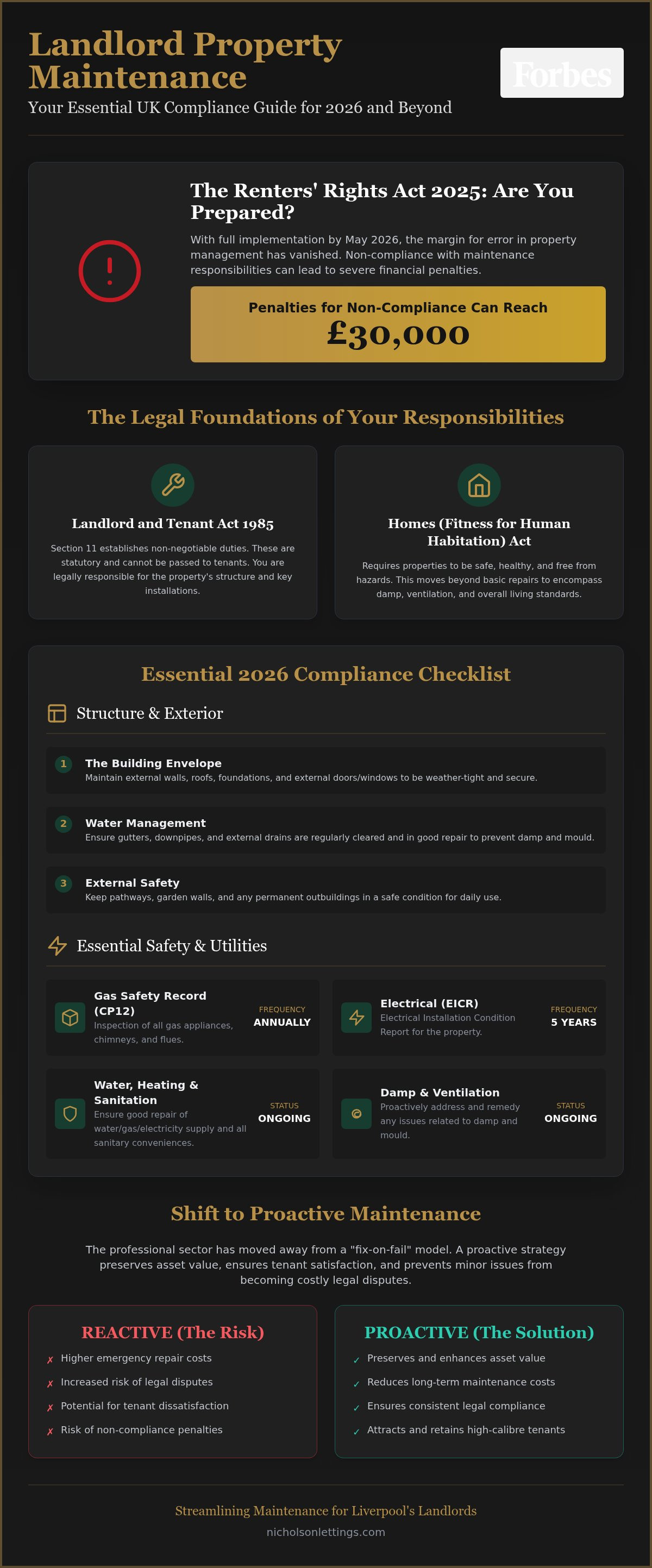
What if your current maintenance routine is actually a legal liability waiting to happen? With the full implementation of the Renters' Rights Act 2025 in May 2026, the margin for error in property management has effectively vanished. Understanding your landlord property maintenance responsibilities UK is no longer just about keeping a property tidy; it's a vital shield against financial penalties that can reach £30,000 for non-compliance.
We know that the stress of finding reliable tradespeople in the Liverpool City Region whilst keeping up with evolving safety laws can be exhausting. It's a heavy burden for any property owner to carry alone. You'll master your legal obligations and maintain premium property standards with our comprehensive UK landlord maintenance guide. We've compiled a clear 2026 compliance checklist that covers everything from electrical safety to the latest energy efficiency requirements, ensuring you enjoy a streamlined, stress-free management process.
Table of Contents
Understanding Landlord Property Maintenance Responsibilities UK
The foundation of any successful rental investment lies in a clear understanding of the Landlord and Tenant Act 1985. This legislation serves as the definitive rulebook for the UK rental industry. Specifically, Section 11 outlines the non-negotiable landlord property maintenance responsibilities UK owners must uphold. These duties are statutory. You cannot contract out of them or pass them to a tenant via a tenancy agreement. If the roof leaks or the foundations shift, the burden of repair sits squarely with the landlord. It's a legal reality that demands professional oversight and consistent attention.
The Legal Framework for 2026
By 2026, the standard for "Fitness for Human Habitation" has evolved beyond mere structural integrity. It now encompasses a holistic view of the living environment. Properties must be free from hazards that could affect the health or safety of occupants. The professional sector has shifted away from reactive "fix-on-fail" models. High-end providers now focus on proactive maintenance to preserve asset value and ensure tenant satisfaction. This approach prevents minor issues from escalating into costly legal disputes or emergency repairs. It's about staying ahead of the curve to protect both the resident and the investment.
Structure and Exterior Obligations
Your responsibility extends to the very bones of the building. You're legally required to keep the structure and exterior of the property in good repair. This includes maintaining the following elements:
The Building Envelope: External walls, roofs, foundations, and external doors or windows must remain weather-tight and secure.
Water Management: Gutters, downpipes, and external drains require regular clearing and repair to prevent damp and mould ingress.
External Safety: Pathways, garden walls, and permanent outbuildings must be safe for daily use.
Neglecting these areas often leads to secondary issues inside the property. A slipped tile today can result in a significant damp claim tomorrow. In the competitive Liverpool City Region market, maintaining these standards is essential for attracting high-calibre tenants who expect excellence.
In 2026, maintenance is increasingly viewed through the lens of sustainability. With the 2030 deadline for EPC 'C' ratings approaching, smart landlords are integrating energy-efficient upgrades into their routine maintenance schedules. This might include improving insulation during roof repairs or installing high-performance windows during scheduled exterior refurbishments. Meeting landlord property maintenance responsibilities UK today means preparing your property for the environmental standards of tomorrow. It's a strategic move that enhances property value whilst ensuring total compliance.
Essential Safety Checks and Utility Maintenance
Safety is the core of your legal protection. Fulfilling your landlord repair responsibilities involves managing complex technical schedules that ensure every resident remains safe and every system functions as intended. In the eyes of the law, ignorance of a fault is no defence. You're expected to be proactive. This means staying ahead of expiry dates and ensuring that every certificate is issued by a qualified, registered professional. These checks form a critical part of your landlord property maintenance responsibilities UK, providing the documented proof needed to shield you from liability.
Gas and Electrical Compliance
Gas safety is a non-negotiable annual requirement. You must secure a Gas Safety Record (CP12) every 12 months. This inspection must be conducted by a Gas Safe registered engineer who will check all gas appliances, chimneys, and flues. Electricity requires similar rigour. An Electrical Installation Condition Report (EICR) must be updated every five years, or sooner if specified in the previous report. For those managing high-end furnished apartments, Portable Appliance Testing (PAT) is strongly recommended for any provided electrical goods to ensure they remain safe for tenant use. For a deeper dive into local requirements, see our Landlord Safety Responsibilities in Liverpool: A 2026 Compliance Guide.
Water, Heating, and Sanitation
A property without reliable heating or sanitation is legally uninhabitable. You're responsible for keeping the supply of water, gas, and electricity in good repair. This includes maintaining basins, sinks, baths, and other sanitary conveniences. Boilers and central heating systems require regular servicing to ensure they provide consistent comfort throughout the year. In the North West, the winter months bring the specific risk of frozen pipes. Proactive insulation and tenant education on maintaining a minimum ambient temperature are essential steps to prevent catastrophic leaks. In 2026, landlords must also maintain a valid Legionella risk assessment to ensure all water systems are kept in a condition that prevents the growth of harmful bacteria.
Managing these rolling deadlines across multiple properties can quickly become a full-time job. It's often the primary cause of landlord burnout. Many professional investors now choose to utilise Dedicated Maintenance Services to handle these logistics. This ensures that no certificate ever expires and every repair is handled by a trusted professional. It's a simple way to maintain premium standards whilst removing the administrative burden from your daily schedule. By centralising your compliance, you create a more reliable experience for your tenants and a more secure investment for yourself.
Health, Habitation, and Interior Standards
The Homes (Fitness for Human Habitation) Act provides the legal framework for interior quality across the UK. It dictates that a property must be fit for people to live in from the start of the tenancy until the very last day. Your landlord property maintenance responsibilities UK involve monitoring 29 potential hazards that could impact an occupant's wellbeing. These aren't just structural issues. They include factors like lighting, noise, and even domestic hygiene. Keeping a property "fit" means more than just fixing what's broken. It's about maintaining a standard that supports a healthy, safe lifestyle. You can find a comprehensive list of these landlord responsibilities on the GOV.UK website to ensure your portfolio is fully covered.
Damp, Mould, and Ventilation
Damp and mould represent the most significant risk to both tenant health and property value. It's vital to identify the root cause quickly to prevent long-term damage. Rising damp requires structural intervention, whilst penetrating damp usually points to exterior issues like blocked gutters or failing masonry. Condensation is often a shared battle. However, you must provide effective ventilation, such as high-grade extractor fans and trickle vents, to allow moisture to escape. Improving insulation is another key step. Cold walls attract moisture. By keeping the property warm and well-ventilated, you eliminate the conditions mould needs to thrive. Regular inspections help you spot the early signs of damp before they lead to expensive remedial work or formal health complaints.
Maintaining Luxury Furnishings
When you offer premium accommodation, the expectations for maintenance naturally rise. Your duty of care includes every piece of furniture and every appliance you provide as part of the tenancy. If a designer sofa breaks or a high-spec oven fails, it's your job to repair or replace it promptly. You aren't just maintaining a building; you're maintaining a lifestyle. Keeping that "premium" feel in areas like the Liverpool City Region is what keeps tenant turnover low and protects your rental yield. This is part of a broader strategy for long-term investment success. For more insights into this approach, read The Landlord’s Guide to Expert Property Management in 2026.
Professional tenants also place a high value on space and light. Ensuring every room meets modern space standards and is well-lit isn't just about compliance. It's about providing a superior living experience that justifies a premium rent. Every fixture, from the kitchen tap to the bedroom lighting, must function perfectly to meet the high standards of the modern professional market. Neglecting these interior details can lead to a slow decline in property value and a higher rate of tenant churn. Proactive care ensures your property remains a top-tier choice for the region's best tenants; you can learn more about Apartment Clean to see how their specialist services support high-end properties across the North West.
The Maintenance Checklist for Rental Estate Agents
Transitioning from legal requirements to daily operations is where many landlords struggle. Successfully managing landlord property maintenance responsibilities UK requires a rigorous, document-led approach that leaves nothing to chance. It isn't enough to simply fix things when they break. You need a system that anticipates wear and tear whilst respecting the boundaries of the tenancy. This professionalisation of maintenance is what separates high-performing investments from those that become a source of constant stress. By treating property care as a structured business process, much like the rigorous financial oversight provided by Brown Hamilton Partners, you protect both your asset and your reputation.
Routine Inspections and Reporting
Regular property inspections are your primary tool for asset protection. We recommend scheduling visits every three to six months to assess the property's condition without infringing on the tenant's right to quiet enjoyment. These visits aren't just about checking for damage. They're an opportunity to spot early warning signs like slow leaks or failing seals that could lead to the damp issues discussed in previous sections. Using digital tools to track these visits allows you to maintain a comprehensive maintenance history. This documentation is invaluable if a dispute arises regarding the return of a deposit or the timeline of a specific repair. Clear communication ensures tenants feel supported rather than monitored, which significantly reduces friction when access is required for essential works.
Emergency vs. Routine Repairs
Effective management relies on a clear triage system. You must define what constitutes an emergency to manage tenant expectations and contractor costs. A total loss of heating in winter or a major water leak requires an immediate response, typically within 24 hours. Routine repairs, such as a dripping tap or a faulty cupboard hinge, can be scheduled over a few days. Professional rental agents maintain a 24/7 reporting process so tenants always have a point of contact for urgent issues. This proactive stance prevents minor faults from escalating into structural damage or legal liabilities. It also builds trust, as tenants see that their comfort and safety are treated as top priorities.
Long-term financial planning is equally important. Smart investors establish a "sinking fund" to cover major capital expenditures like roof replacements or boiler upgrades. By setting aside a portion of the monthly rent, you ensure that these inevitable costs don't cripple your cash flow when they eventually arise. If the logistical burden of coordinating tradespeople and tracking invoices feels overwhelming, you can offload the entire process to our Dedicated Maintenance Services. We handle the triage, the contractors, and the documentation, allowing you to focus on growing your portfolio whilst we maintain your premium standards.
Streamlining Maintenance with Nicholson Lettings
Managing landlord property maintenance responsibilities UK doesn't have to be a source of constant stress. At Nicholson Lettings, we've refined our approach across more than 250 high-quality properties in the Liverpool City Region. We understand that your time is valuable. Our dedicated maintenance team acts as your protective shield, handling the logistical heavy lifting so you don't have to. By centralising every repair and compliance check, we ensure that your portfolio remains a high-performing asset rather than a series of administrative hurdles.
The Nicholson Maintenance Advantage
We provide immediate access to a network of vetted, reliable tradespeople who understand the high standards required for luxury lettings. Our team handles everything from minor cosmetic touch-ups to complex structural repairs. We specialise in rapid refurbishments between tenancies, ensuring your property is returned to a "like-new" state with minimal void periods. A unique element of our service is the Tenant Liaison Officer assigned to every property. This role is crucial for bridging the gap between landlord requirements and tenant satisfaction. For a closer look at how this role benefits the rental experience, read The Role of a Tenant Liaison Officer in St Helens: A Renter’s Guide to Stress-Free Living.
Protecting Your Investment Long-Term
Luxury furnished apartments require a specialist management approach. High-end fixtures and designer furniture demand proactive care to maintain their value and appeal. We implement preventative maintenance strategies that identify potential issues before they become expensive failures. This foresight saves our clients thousands of pounds over the life of an investment. In a competitive market like Liverpool, keeping your property in peak condition is the most effective way to secure professional, long-term tenants. We take pride in maintaining the "premium" status of every home we manage, ensuring your ROI is protected through excellence in care.
Our service is designed for the modern investor who demands efficiency and transparency. We provide clear reporting and streamlined communication, keeping you informed without overwhelming your daily schedule. Every decision we make is rooted in our local expertise and commitment to professional standards. If you're looking for a partner to handle your landlord property maintenance responsibilities UK with poise and precision, we're here to help. Contact our team today to discuss bespoke management for your portfolio and experience the peace of mind that comes with expert care.
Secure Your Investment for 2026 and Beyond
Mastering landlord property maintenance responsibilities UK is a continuous commitment to quality and safety. The 2026 landscape demands more than just basic repairs; it requires a proactive strategy that integrates energy efficiency with rigorous safety compliance. By prioritising regular inspections and maintaining a clear triage system, you protect your residents whilst enhancing the long-term value of your asset. It's about staying ahead of the curve to ensure your property remains a premium choice in a competitive market.
Managing a growing portfolio shouldn't lead to burnout. We currently look after over 250 properties, backed by an award-winning landlord support system and a dedicated in-house maintenance team. This level of expertise allows you to step back from the daily grind of contractor coordination and compliance tracking. Your investment deserves the highest standards of care.Discover how our professional property management can protect your investment and provide you with a truly stress-free experience.
The future of the UK rental market is professional and safety-focused. We're here to ensure your portfolio doesn't just meet the new standards but sets them. Let's work together to build a secure, profitable future for your properties.
Frequently Asked Questions
What are the main landlord property maintenance responsibilities in the UK?
Main landlord property maintenance responsibilities UK include keeping the structure and exterior in good repair whilst ensuring all utility installations function correctly. This covers roofs, walls, windows, and drainage. You're also legally bound to maintain boilers, pipes, and electrical wiring. Since the 2026 updates, you must also ensure the property remains free from health hazards like severe damp or mould growth throughout the entire tenancy.
Can a landlord charge a tenant for repairs?
You cannot charge a tenant for repairs resulting from fair wear and tear or structural failure. These costs are part of your statutory obligations. You can only seek reimbursement if the damage was caused by the tenant’s deliberate misuse or negligence. In such cases, you must provide clear evidence and a fair quote for the work before deducting any costs from a deposit or charging the tenant directly.
How quickly must a landlord carry out repairs in 2026?
Emergency repairs must be addressed within 24 hours to ensure the property remains safe and habitable. For non-emergency issues that are still urgent, such as a minor leak, a response within a few days is expected. Routine maintenance should typically be completed within 28 days. Professional management teams use these windows as a baseline to ensure they meet the "reasonable time" requirement established by UK law.
Is the landlord responsible for garden maintenance?
Tenants are usually responsible for basic upkeep like weeding and mowing, but landlords must maintain permanent structures and large trees. Your tenancy agreement should clearly define these boundaries. For luxury apartments in the Liverpool City Region, many landlords choose to include professional garden maintenance as part of their service. This ensures the exterior always reflects the premium standards of the interior and protects the property's kerb appeal.
Do landlords have to provide a replacement boiler immediately?
You're required to restore heating and hot water as a matter of urgency, typically within 24 hours during colder months. Whilst a full boiler replacement might take longer than a single day to organise, you must provide adequate temporary heating in the interim. A property without a functioning boiler is considered a health hazard, so finding a swift solution is a priority for any professional landlord.
What happens if a landlord fails to maintain a property to legal standards?
Failing to meet legal standards can result in severe financial penalties and legal action from your tenants. Local authorities have the power to issue improvement notices or civil penalties of up to £30,000 for non-compliance. Additionally, under the Renters' Rights Act 2025, you may be barred from using specific eviction grounds if the property has outstanding Category 1 hazards or unresolved maintenance issues that affect habitation.
Are landlords responsible for pest control in the UK?
Landlords are responsible for pest control if the infestation is caused by a structural defect or a failure to maintain the property. If mice are entering through holes in the masonry or rats are attracted by faulty drains, the cost of eradication sits with you. However, if the issue stems from a tenant’s lifestyle or poor waste disposal, the responsibility may shift to the occupant. Identifying the root cause quickly is essential for a fair resolution.
Does a landlord have to redecorate a property during a tenancy?
There's no statutory duty to redecorate during a tenancy unless the walls or ceilings were damaged by a repair you were responsible for. Most landlords choose to refresh the decor between tenancies to maintain a high-end feel. For long-term residents, offering a fresh coat of paint every few years can be a strategic way to reduce tenant turnover and maintain your property’s premium market position.